Fast Bail Bonds Las Vegas · Independent private agency · Las Vegas, Nevada
(702) 387-5555Contact
Restrained courthouse architectural exterior with broad steps and columns

Las Vegas, Nevada / manslaughter information

Manslaughter Bail Bonds in Las Vegas, Nevada

Understand the charge. Confirm the court order.

Clear guidance for families navigating voluntary or involuntary manslaughter allegations in Nevada. Our team can explain an authorized bond transaction while the court and holding authority control release.

Independent private bail agency · not a government inmate locator. An inquiry does not guarantee acceptance, an available bond or immediate release.

Step 1 / 3

Who needs to be bailed out?

Enter as much as you know.

  1. 01Defendant info
  2. 02Location
  3. 03Contact info
Step 1 / 3

Secure & private · HTTPS encrypted

01 / Nevada manslaughter guide

Understanding Manslaughter Bail Bonds in Nevada

The charge, the law and the court order are separate checkpoints.

An arrest involving a death raises serious questions for a family. Start with the actual filed charges, not a description passed along by someone else. An allegation is not a conviction. Voluntary manslaughter, involuntary manslaughter, murder and traffic-related offenses have different statutory elements; a single word on an informal account does not establish the applicable law.

NRS 200.040 defines manslaughter as the unlawful killing of a human being without malice, express or implied, and without any mixture of deliberation. That absence is central to the Chapter 200 definition. The statute recognizes voluntary manslaughter upon a sudden heat of passion caused by legally sufficient provocation, and involuntary manslaughter in the circumstances the law specifies. It expressly excludes vehicular manslaughter under NRS 484B.657.

For an ordinary manslaughter charge, the bail inquiry generally starts under NRS 178.484(1), subject to its exceptions and other applicable restrictions. The special first-degree murder provision in NRS 178.484(4) does not apply merely because someone died. It may matter if an active first-degree murder charge also remains in the case. Warrants, other holds and enforceable orders must be checked separately.

Fast Bail Bonds Las Vegas assists with an authorized surety bond and the related paperwork. The agency does not determine guilt, classify the evidence, set a bond amount or decide whether someone is legally eligible for release. A qualified Nevada criminal defense attorney addresses those legal questions; the court establishes release terms.

Important Legal Distinction

Under Nevada law, manslaughter and murder are separate offenses. Manslaughter is defined by the absence of malice and deliberation. Bail eligibility depends on the actual charges, applicable law, and court orders.

NRS 200.040

Two Principal Forms

Voluntary manslaughter requires the legally defined heat-of-passion and provocation circumstances. Involuntary manslaughter concerns a killing without intent to kill under NRS 200.070. Neither form can be reduced to a general label of accidental death.

NRS 200.070

A Bond Is Not a Case Outcome

Pretrial release does not dismiss a charge or resolve guilt. Conditions and future appearances remain governed by the court. A bond arrangement cannot replace a hearing, clear an unrelated hold or decide the final charge.

NRS 178.484

02 / Nevada manslaughter guide

Manslaughter Charges and Related Allegations

Eight charging distinctions families may need to confirm.

Use the statute, charge description and current order together. These distinctions explain what may appear on a booking or case record; they are not a determination that a particular person committed an offense. Charging decisions, competing allegations and any lesser-included-offense issues belong to prosecutors, courts and defense counsel.

An offense classification describes criminal exposure if convicted. It is not a scheduled bond amount. Separate counts may require separate review, but this guide supplies no automatic addition or stacking formula. The responsible court and holding authority identify what must be satisfied for an authorized release.

Voluntary Manslaughter

NRS 200.040, NRS 200.050 and NRS 200.060 address sudden heat of passion, sufficient provocation and the cooling interval. An argument does not automatically meet the standard. NRS 200.080 classifies voluntary manslaughter as a Category B felony. The general bail framework applies subject to other lawful restrictions.

NRS 200.050

Involuntary Manslaughter During an Unlawful Act

NRS 200.070 concerns killing without intent to kill in the commission of an unlawful act. NRS 200.090 supplies Category D classification. But where the unlawful act naturally tends to destroy human life or is committed in prosecution of a felonious intent, NRS 200.070 identifies the offense as murder.

NRS 200.070

Involuntary Manslaughter During a Lawful Act

The statute also addresses a lawful act that probably might produce death when performed in an unlawful manner. Due caution and circumspection mean the care and attention required in the circumstances, not a rule that every accident is a crime. The statutory elements and exceptions still matter.

NRS 200.070

Manslaughter and Murder Allegations in the Same Case

An amended charge, alternative allegation or lesser-included posture does not itself establish new release permission. Actual pending charges and orders control. An active first-degree murder allegation may invoke NRS 178.484(4), even if manslaughter is also alleged. No reduction or release outcome is promised.

NRS 178.484(4)

Vehicular Manslaughter

NRS 484B.657 addresses a death proximately caused by an act or omission constituting simple negligence while driving or in actual physical control of a vehicle on a highway or premises to which the public has access. It is a misdemeanor separate from Chapter 200 manslaughter. The statute also preserves specified zone-related additional penalties; other charges require their own analysis.

NRS 484B.657

DUI Causing Death and Vehicular Homicide

NRS 484C.430 governs the separate DUI death or substantial-bodily-harm penalty framework, subject to its distinctions and exceptions. NRS 484C.130 defines vehicular homicide with additional elements; NRS 484C.440 provides its Category A penalties. Do not apply Chapter 200 manslaughter penalties to these offenses.

The DUI guide addresses the broader DUI framework. A traffic-related death is not automatically vehicular homicide.

NRS 484C.430

Manslaughter With Additional Charges or Holds

Separate allegations, warrants, other jurisdictions and judicial restrictions can affect custody. A bond authorized on one count does not establish that every matter is cleared. Ask which orders apply and which authority controls each hold; there is no universal additional bond for every charge.

NRS 178.484

Cases Involving Amended or Reduced Charges

Charges can change through lawful prosecutorial decisions and court proceedings. A case initially involving murder may later involve manslaughter, but that is a possibility rather than an expected or promised result. The bail inquiry follows the actual current charges and enforceable orders. A bond agency does not negotiate a charge change.

NRS 200.040

03 / Nevada manslaughter guide

Is Bail Available for Manslaughter in Nevada?

General eligibility is not the same as authorized physical release.

Manslaughter ordinarily falls under Nevada’s general admission-to-bail framework in NRS 178.484(1), subject to statutory exceptions, judicial orders, warrants and other holds. Neither voluntary nor involuntary manslaughter automatically takes on the special first-degree murder rule because the allegation involves a death. The court decides the permitted conditions; a family or bail agency cannot supply that decision.

NRS 178.484(4) specifically addresses first-degree murder. If that allegation remains active, a separate or alternative manslaughter allegation does not cancel it. Under subsection (4), admission to bail is a discretionary judicial determination unless proof is evident or presumption great, with due weight given to evidence and circumstances. It is neither guaranteed release nor automatic detention in every first-degree case.

A court may authorize conditions that do not require a surety bond. If a surety bond is authorized, an agency may assist subject to the order, law and underwriting requirements. Posting a permitted bond and clearing all barriers to release are different events. The facility confirms custody status and implements the controlling orders.

Manslaughter vs. Murder Bail: a manslaughter-only inquiry generally begins with NRS 178.484(1), subject to exceptions; an active first-degree murder charge requires the separate NRS 178.484(4) analysis. The companion Murder Cases guide explains that distinction. Eligibility, the authorized amount, bond acceptance and physical release must never be treated as interchangeable.

State A — Manslaughter Charge, No Bond Order Yet

GENERAL BAIL FRAMEWORK — COURT REVIEW REQUIRED. Release terms depend on applicable statutes, judicial decisions and other holds. Confirm whether an order exists and what proceedings are needed. Do not assume any amount from the name or felony classification of the charge.

NRS 178.484(1)

State B — Court Has Authorized Release and Set Conditions

BOND OR RELEASE CONDITIONS APPLY. The actual order controls. If a surety bond is permitted, the agency can review the authorized amount and requirements. Nonmonetary conditions may apply; the agency’s acceptance alone does not establish that all release restrictions are satisfied.

NRS 178.4851

State C — First-Degree Murder Charge or Other Restriction Remains

ADDITIONAL LEGAL REVIEW REQUIRED. An active first-degree murder charge may invoke NRS 178.484(4). Other warrants, holds or court restrictions may prevent release even if the manslaughter count is otherwise bailable. A private bond agency cannot override them.

NRS 178.484(4)

04 / Nevada manslaughter guide

What Nevada Courts Consider Before Release

The court evaluates the applicable law and the individual record.

NRS 178.4851 provides a least-restrictive-means framework for release decisions, subject to statutory exceptions. It must be read with NRS 178.4853, NRS 178.498 and any restriction applicable to the actual charges. It is not a promise that every person receives a monetary bond, a particular condition or immediate release.

Relevant considerations include the nature of the allegations, likely sentence in relation to nonappearance risk, appearance history, prior failures to appear, criminal record, residence, employment, family and community ties, available community support, reputation and character, relevant mental-condition considerations, community safety and the risk of further criminal activity. Applicable restrictions and other relevant statutory circumstances also matter. No single favorable fact automatically determines the result.

A judge may impose lawful travel, contact or conduct conditions when appropriate. Do not assume those conditions apply in every manslaughter case or that a family may substitute its own version. Obtain the actual written order and discuss its meaning with counsel. Employment records and character information do not create an automatic right to release, and this guide does not advise anyone about witness testimony.

Court — Legal Release Terms

The court applies the governing bail law, evaluates the relevant record and determines enforceable release conditions. Only authorized judicial action changes those terms.

NRS 178.4851

Attorney — Representation and Advice

Defense counsel addresses the charges, hearing, statutory restrictions and legal meaning of the order. Questions about evidence, defenses or legal strategy belong in that professional relationship.

NRS 178.4853

Agency — Authorized Bond Assistance

The bail agency reviews an authorized surety bond, explains its transaction requirements and coordinates paperwork and posting where accepted. It cannot change the legal decision or eliminate another authority’s hold.

NRS 697.300
  1. Identify the actual pending charges
  2. Obtain the current judicial order
  3. Check independent warrants and holds
  4. Confirm whether surety posting is permitted

05 / Nevada manslaughter guide

Voluntary vs. Involuntary Manslaughter

Different statutory elements; no offense-based bond estimate.

Both principal Chapter 200 forms fall within NRS 200.040’s absence-of-malice-and-deliberation definition. Voluntary manslaughter focuses on legally sufficient provocation and sudden passion. Involuntary manslaughter focuses on a killing without intent to kill in the unlawful-act or unlawfully performed lawful-act circumstances specified in NRS 200.070. Neither is established simply by calling a death accidental or describing an argument.

The comparison below separates legal characteristics from punishment after conviction. Prison terms and potential fines are sentencing exposure, not bond amounts, premiums or a pretrial-release prediction. The general Category D fine qualification in NRS 193.130 must be retained: a different applicable statute may provide otherwise.

Cooling Interval — NRS 200.060

If an interval after the assault or provocation is sufficient for reason and humanity to reassert themselves, the statute attributes the killing to deliberate revenge and punishes it as murder. There is no fixed number of minutes or hours in this explanation. Counsel must address the legally relevant facts.

NRS 200.060

Involuntary Murder Boundary — NRS 200.070

When an involuntary killing occurs during an unlawful act that naturally tends to destroy human life, or is committed in prosecution of a felonious intent, the statute identifies the offense as murder. Lack of intent to kill does not by itself exclude murder.

NRS 200.070

Legal Characteristics Compared

SENTENCING EXPOSURE AFTER CONVICTION — NOT BAIL AMOUNTS
Legal characteristicVoluntaryInvoluntary
Statutory definitionSudden heat of passion from legally sufficient provocation; no malice or deliberation.Killing without intent to kill in NRS 200.070’s specified circumstances; no malice or deliberation.
Relevant statutesNRS 200.040 / 200.050 / 200.060 / 200.080NRS 200.040 / 200.070 / 200.090 / 193.130
Intent / provocation frameworkSerious and highly provoking injury meeting the reasonable-person threshold, or the statutory attempt to inflict serious personal injury.Unlawful act, or lawful act probably capable of producing death performed unlawfully; statutory exceptions apply.
Malice requirementManslaughter definition excludes express or implied malice.Same exclusion; NRS 200.070’s murder boundary must be considered.
Cooling intervalNRS 200.060 may attribute the killing to deliberate revenge and murder.Not the defining voluntary-passion inquiry; the NRS 200.070 boundary controls.
Felony classificationCategory B under NRS 200.080Category D under NRS 200.090
Sentencing exposure after conviction — not bail1–10 years; possible fine up to $10,000.1–4 years under NRS 193.130; possible fine up to $5,000 unless otherwise provided.
General bail postureNRS 178.484(1), subject to exceptions, orders and other active charges.Same general starting point; actual orders and holds still control.

06 / Nevada manslaughter guide

How the Bail Process Works

Five stages, with court authorization kept in the sequence.

Before a bond is set, a family can gather identifying details, confirm the holding authority and ask whether a hearing or release order is pending. Missing some information does not prevent a preliminary call. Avoid sending witness statements, evidence accounts or confidential attorney communications through a public inquiry.

Fast’s 24/7 telephone availability concerns agency contact. It does not mean courts hear matters around the clock or facilities process every posting immediately. No stage below bypasses judicial authority, guarantees same-day release or promises a fixed custody-processing duration.

  1. Stage 1 of 5

    Confirm Custody

    Confirm the full legal name, facility, booking details and actual current charges. Verify information with the responsible holding authority rather than assuming every Las Vegas arrest is housed at one location.

    Date of birth or booking number, if known, may help distinguish records.

  2. Stage 2 of 5

    Review Existing Orders

    Identify the authorized amount, release conditions, additional allegations, warrants and holds. Check whether the record is current; an older order or a cleared count may not reflect every matter.

    A surety bond may not be the court’s chosen release condition.

  3. Stage 3 of 5

    Identify the Court Decision Required

    Determine whether release and surety posting are already authorized or further court proceedings are necessary. Pay particular attention to an active first-degree murder allegation and any independent detention restriction.

    An agency cannot grant permission while the required court decision is unresolved.

  4. Stage 4 of 5

    Complete Authorized Bond Paperwork

    Review the statutory premium, any required collateral, permitted actual expenses and applicant obligations. Identity and payment verification belong in appropriate secure channels after the authorized transaction is reviewed.

    No universal financing or collateral terms are assumed.

  5. Stage 5 of 5

    Post Bond and Await Processing

    Post only an authorized and accepted bond in accordance with the applicable order and facility requirements. Custody processing and physical release remain under the responsible authority’s control.

    Posting does not by itself clear separate holds or guarantee a release time.

07 / Nevada manslaughter guide

How Much Does a Bail Bond Cost?

The court-authorized amount is the input, not the charge label.

NRS 697.300 establishes a premium of 15% of the bond amount or $50, whichever is greater. A calculator can illustrate that arithmetic only when a court-authorized amount is available. It cannot decide eligibility, infer bail from a felony category or turn a family’s entered number into a judicial order.

There is no typical or average manslaughter bond amount presented here. Voluntary and involuntary classifications do not produce an automatic monetary schedule on this page. Obtain the actual order, confirm that a surety bond is permitted and check remaining restrictions before reviewing a transaction.

Review the entire proposed agreement, not merely the displayed premium. Ask what is premium, what is collateral, what actual expenses are permitted and explained, and what obligations the applicant accepts. The premium and a potential criminal fine are different charges serving different purposes. No universal financing arrangement, collateral requirement or acceptance promise is supplied.

Court-authorized amount / no assumed bail

Authorized Surety Bond Premium Calculator

Enter an amount only if the court has authorized a surety bond. Your entry is not a court order, an eligibility decision or confirmation that other holds have cleared.

Statutory premium framework
15%$50 minimum

A bond premium cannot be calculated until a court-authorized bond amount is available.

Bond posting depends on the court's authorization and any applicable holds or release restrictions.

Premium, collateral and permitted actual expenses are separate. No financing arrangement or universal collateral requirement is assumed. NRS 697.300 — bail bond charges.

Court-Set Bond

The court establishes any monetary bond and its release terms. That amount is not the bail agency’s premium and may not be the only condition of an authorized release.

NRS 178.484

Bail Bond Premium

The statutory premium is 15% or $50, whichever is greater. It is distinct from the full court-set bond and is nonrefundable; the calculator does not guarantee an accepted transaction.

NRS 697.300

Collateral

Collateral, if required and lawfully accepted, is security separate from premium. Requirements depend on the transaction; this guide does not promise that collateral is always needed or always waived.

NRS 697.300

Other Lawful Charges

Only permitted actual expenses and charges, properly explained under Nevada law, may be considered separately. No invented fee, court fine or universal add-on is included in the calculator.

NRS 697.300

08 / Nevada manslaughter guide

Information Families Need to Get Started

A preliminary call does not require a complete case file.

Families do not need every detail before calling. Start with preliminary identification and whatever reliable custody information is available. Say when a detail is unknown rather than guessing a facility, degree of charge, hearing status or bond amount. The agency can discuss what to verify next without determining the criminal case.

The six checklist groups organize preparation, not mandatory public-form fields. Information needed later for a bond transaction may include the current order, authorized amount, applicant verification and payment arrangements through appropriate secure channels. The existing inquiry form remains unchanged.

Do not send passwords, identity-document images, witness statements, evidence narratives, attorney-client communications or unnecessary financial information through unsecured public messages. Criminal-defense material belongs with counsel. Identity and payment verification should use appropriate authorized secure channels when a transaction is ready for review.

0 of 6 details at hand

09 / Nevada manslaughter guide

Clark County Jails and Custody Information

Verify the person and the current holding authority.

A Clark County or Las Vegas arrest does not establish the facility where a person is currently held. The person may be awaiting booking, held under an existing order, transferred between facilities, subject to another jurisdiction’s warrant or hold, or awaiting a judicial proceeding. Use the responsible authority’s current record rather than assigning custody from the charge or neighborhood.

The verified Clark County detention directory provides official custody channels. If the record is incomplete or a transfer is reported, confirm which facility has custody and which authority may accept an authorized bond. An arresting agency and a holding facility are not always the same institution.

Bond posting and physical release are separate events. A facility must review its records and controlling orders, including independent holds. No visiting schedule, processing duration or universal release sequence is assumed here. Federal or other-jurisdiction matters may involve different law and procedures; Nevada statutes alone cannot resolve them.

Use Official Custody Channels

Confirm legal name, booking identifiers if available, current facility and actual custody status through the official county directory. A similar name or old entry is not enough to establish a current record.

Check Every Controlling Matter

Ask whether another case, warrant, transfer or judicial restriction affects release. A bond authorized in one matter does not establish that all barriers in another matter have been satisfied.

NRS 178.484

Keep Record and Timing Separate

A facility’s custody information identifies status; it does not promise when processing will finish. Telephone availability at the agency cannot change the holding authority’s workflow.

10 / Nevada manslaughter guide

Las Vegas Courts and Bail Hearings

Judicial proceedings determine the enforceable next step.

Nevada courts address initial appearances, identification of charges, bail and release decisions, enforceable conditions and later hearings. A bond is not necessarily set at the first appearance. The court with authority and the procedures involved depend on the actual case, not merely where a family lives or which agency receives a call.

Prosecutors make charging decisions within the law; defense attorneys represent the accused and address legal issues; courts issue orders; bail agencies assist with permitted surety transactions; custody facilities implement applicable release instructions and record checks. Those roles are distinct. Neither paperwork coordination nor a paid premium gives an agency influence over the legal outcome.

Charges or release orders may change through lawful proceedings. Obtain the current order after any relevant hearing rather than relying on an earlier amount or an informal account of a change. Counsel can explain whether further judicial action is needed and how conditions must be followed. This guide does not promise a hearing schedule or assess a defense.

For Las Vegas or Eighth Judicial District Court proceedings, verify the court identified on the case notice and use its official case channels. The Eighth Judicial District Court website below provides official court resources, including access to its case-lookup service. That website does not establish that a particular matter belongs in that court or that release has been authorized.

Initial Judicial Review

Confirm what charges are pending and whether an order has been issued. An appearance does not automatically mean the court has set a surety amount or that custody restrictions are cleared.

NRS 178.484

Bail Hearings and Conditions

Counsel addresses the applicable legal standard and factors. The judge decides lawful terms, subject to statutory exceptions. The agency reviews only the permitted bond transaction.

NRS 178.4851

Later Orders and Compliance

Follow the actual release conditions and required appearances. Ask counsel about legal questions or a proposed change; an agency cannot informally rewrite a court order.

NRS 178.498

11 / Nevada manslaughter guide

Manslaughter, Murder and Traffic-Related Deaths

Similar outcomes do not make the offenses interchangeable.

NRS 200.040’s defining absence of malice and deliberation must remain distinct from murder’s statutory framework in NRS 200.010 and NRS 200.030. Murder includes the malice branch and separate controlled-substance causal branches. It is unsafe to assume that every offense without intent to kill excludes murder, or that all deaths involving a vehicle fall within Chapter 200 manslaughter.

NRS 200.070 begins with exceptions for the circumstances provided in NRS 484B.550 and NRS 484B.653, and separately excludes vehicular manslaughter under NRS 484B.657. These traffic provisions must not be erased from a discussion of involuntary manslaughter. The actual statutory charge, not a broad description such as negligent driving, determines the legal inquiry.

For involuntary manslaughter, due caution and circumspection refer to the care and attention required when undertaking the relevant lawful act. A lawful act probably capable of producing death must be performed in an unlawful manner for the specified branch. Not every unintentional or negligent death establishes that offense. The naturally-life-destroying unlawful-act and felonious-intent boundary remains a murder rule.

The comparison identifies verified classifications but deliberately omits any offense-based bail amounts. The separate DUI framework has statutory distinctions and exceptions that counsel must consider. These are general legal categories, not an assessment of anyone’s conduct, a recommended plea or a prediction that charges will change.

Manslaughter vs. Murder

NRS 200.040 excludes express or implied malice and any mixture of deliberation. NRS 200.010 and NRS 200.030 govern murder. NRS 200.060 and NRS 200.070 describe important circumstances in which the offense is murder rather than manslaughter. The companion Murder Cases guide addresses its separate bail treatment.

NRS 200.040

Voluntary Manslaughter and the Cooling Interval

NRS 200.050 requires a serious and highly provoking injury sufficient to excite irresistible passion in a reasonable person, or the specified attempt to inflict serious personal injury. NRS 200.060 asks whether a sufficient interval allowed reason and humanity to be heard. No particular evidence or time interval is treated as automatically satisfying the rule.

NRS 200.060

Separate Vehicular Manslaughter

NRS 484B.657 concerns simple negligence causing death while driving or in actual physical control of a vehicle. It is a misdemeanor, expressly separate from Chapter 200 manslaughter. An additional offense or enhancement must be analyzed separately rather than assigned to this offense by assumption.

NRS 484B.657

Separate DUI Death and Vehicular Homicide Offenses

NRS 484C.430 addresses DUI death or substantial bodily harm under its applicable framework. NRS 484C.130 defines vehicular homicide with additional requirements, including at least three qualifying prior offenses; NRS 484C.440 supplies its Category A penalties. Not every DUI-related death satisfies vehicular homicide.

NRS 484C.130

Offense and Bail-Law Boundaries

Classifications are not bond schedules. Actual charging documents, statutory exceptions and court orders control.
Offense / statuteBasic legal distinctionVerified classificationBail-law consideration
Voluntary manslaughter — NRS 200.040 / .050 / .060 / .080Statutory provocation and sudden passion; no malice or deliberation.Category B felonyGeneral NRS 178.484(1) framework, subject to exceptions and active charges.
Involuntary manslaughter — NRS 200.070 / .090Without intent to kill in specified circumstances; murder boundary and traffic exceptions retained.Category D felonyGeneral framework; actual orders and holds control.
Vehicular manslaughter — NRS 484B.657Simple-negligence vehicle-related death; excluded from Chapter 200 manslaughter.MisdemeanorNo assumed amount; actual applicable orders and restrictions.
DUI causing death — NRS 484C.430Separate DUI death / substantial-bodily-harm framework and statutory qualifications.Category B when applicable; statutory exceptions and distinctionsReview the actual DUI charge, applicable law and any independent hold.
Vehicular homicide — NRS 484C.130 / .440Distinct statutory elements and qualifying prior-offense requirements.Category A felonyClassification alone is not a bond amount or automatic first-degree murder bail rule.
First-degree murder — NRS 200.030 / 178.484(4)Separate murder offense and special discretionary bail provision.Category A felonyNRS 178.484(4); a manslaughter allegation does not cancel an active first-degree charge.

12 / Nevada manslaughter guide

How Our Team Supports Families

Practical bond assistance, without legal-outcome promises.

Fast Bail Bonds Las Vegas is family-owned and offers bilingual assistance and 24/7 telephone availability at (702) 387-5555. The verified office is 317 Garces Ave, Suite A, Las Vegas, NV 89101. Our local service context is Las Vegas and Clark County; the holding authority and court still determine the individual case’s release requirements.

Families can call with available identification and custody details to discuss the next bond-related step. Where a surety bond is authorized, the team can review the order, explain premium and permitted charges, address any collateral requirements and coordinate paperwork. That assistance does not substitute for legal representation or guarantee agency acceptance.

Fast Bail Bonds Las Vegas is a bail bond agency, not a law firm. Criminal charges, defenses, plea decisions, and legal strategy should be discussed with a qualified Nevada criminal defense attorney.

No court partnership, government endorsement, special release privilege or attorney relationship is implied. We do not negotiate criminal charges, promise a reduction from murder to manslaughter, secure a particular ruling or guarantee a release deadline. Clear communication means separating what is confirmed from what still requires a court or facility decision.

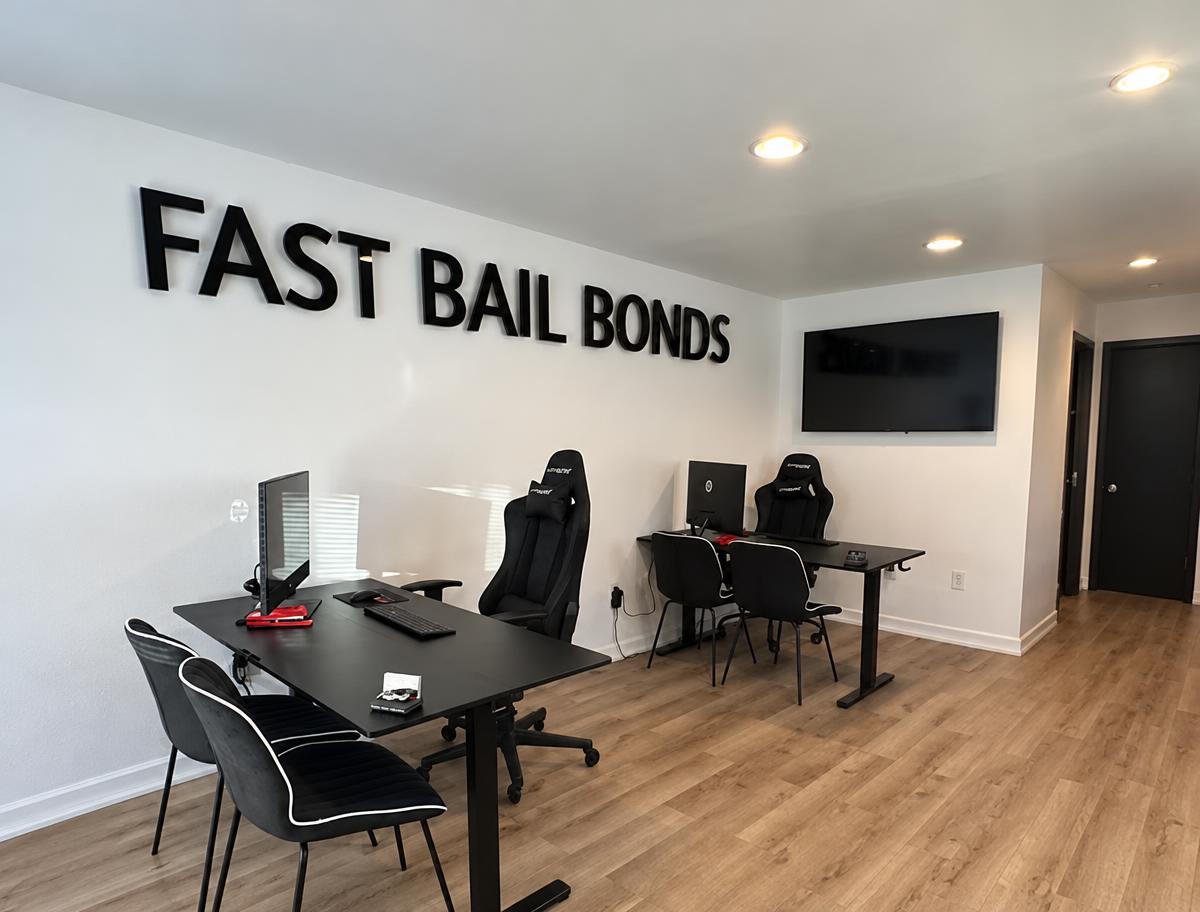
Fast Bail Bonds office in Las Vegas, Nevada
Fast Bail Bonds · Independent private agency

Telephone and Bilingual Assistance

Reach the team at (702) 387-5555 for available bond information. Around-the-clock telephone contact is separate from judicial hearing schedules and custody processing.

Order and Paperwork Coordination

Review the actual surety authorization and explain the transaction steps. If a required decision remains unresolved, the agency cannot post around that restriction.

Clear Cost Explanations

Distinguish premium, collateral and permitted actual expenses before an authorized transaction. No universal financing, collateral waiver or fixed release time is promised.

13 / Preparation and answers

Frequently Asked Questions

Fourteen answers focused on the actual law and next steps.

These answers summarize general Nevada distinctions. They do not replace the filed charge, current judicial order, responsible custody record or advice from a qualified attorney about an individual case. No answer supplies an assumed bond amount or guaranteed result.

Manslaughter Questions and Answers

What is manslaughter under Nevada law?

NRS 200.040 defines manslaughter as unlawful killing without malice, express or implied, and without any mixture of deliberation. It recognizes voluntary and involuntary forms under the statutory circumstances and excludes vehicular manslaughter described in NRS 484B.657. An allegation must be distinguished from a conviction.

Manslaughter ordinarily starts under NRS 178.484(1), subject to statutory exceptions, orders, warrants and holds. The court determines permitted conditions. General eligibility does not establish an amount or guarantee physical release; an agency may assist only with a legally authorized and accepted surety bond.

NRS 200.050 addresses the serious-provocation circumstances required for voluntary manslaughter, read with the sudden-passion and cooling-interval rules. NRS 200.070 concerns a killing without intent to kill during an unlawful act or a specified lawful act performed unlawfully, with important traffic exceptions and a murder boundary.

Yes. NRS 200.080 classifies it as a Category B felony with sentencing exposure after conviction of 1–10 years and a possible fine up to $10,000. These are punishment provisions, not bail amounts. Actual pretrial conditions depend on the court and applicable law.

Yes. NRS 200.090 classifies it as a Category D felony, punished under NRS 193.130. The general sentencing framework is 1–4 years and a possible fine up to $5,000 unless another applicable statute provides otherwise. Those figures are not a bond schedule or premium.

Manslaughter under NRS 200.040 excludes malice and deliberation. Murder has its separate NRS 200.010 and NRS 200.030 framework, including malice and other statutory branches. NRS 200.060’s cooling interval and NRS 200.070’s unlawful-act/felonious-intent boundary can identify murder rather than manslaughter; intent to kill alone does not resolve every distinction.

The active first-degree allegation may invoke NRS 178.484(4), even if a manslaughter allegation appears in the same case. A manslaughter count does not cancel that special discretionary bail rule. Counsel and the court must address the actual current charges, and independent holds may still affect any authorized release.

NRS 200.060 provides that an interval after assault or provocation sufficient for reason and humanity to be heard attributes the killing to deliberate revenge and punishment as murder. The statute is not expressed here as a fixed number of minutes or hours. Its application requires legal assessment of the relevant circumstances.

Yes. NRS 200.070 identifies murder when an involuntary killing occurs during an unlawful act that naturally tends to destroy human life or is committed in prosecution of a felonious intent. A claim that there was no intent to kill does not by itself eliminate the statutory murder boundary.

No. NRS 484B.657 defines a separate simple-negligence vehicle-related death offense classified as a misdemeanor. NRS 200.040 and NRS 200.070 exclude that vehicular offense from Chapter 200 manslaughter. Other traffic offenses or allegations must be assessed under their own governing provisions.

It has a separate DUI-related framework. NRS 484C.430 addresses death or substantial bodily harm under its applicable provisions and exceptions. NRS 484C.130 defines the distinct vehicular-homicide offense with additional requirements, and NRS 484C.440 supplies its penalties. Neither should simply inherit Chapter 200 manslaughter elements or punishment.

Under NRS 697.300, the premium is 15% of an authorized bond amount or $50, whichever is greater. No offense-based amount is assumed. Confirm the court-authorized surety amount and remaining restrictions first. Premium, collateral and permitted actual expenses are distinct; the calculator neither creates an order nor guarantees acceptance.

Timing is case-specific. A required court decision, current conditions, independent holds, posting requirements and facility processing can all affect the sequence. There is no fixed hearing or release duration promised here. Fast’s 24/7 telephone availability does not mean courts or facilities process every step around the clock.

Charges may be amended through lawful prosecutorial decisions and judicial proceedings, but no change is promised. A bail agency does not negotiate charges, provide defense representation or decide a plea. Discuss those issues with qualified counsel; any later bond inquiry must follow the actual current charges and enforceable orders.

14 / Reference desk

Official Nevada Laws and Helpful Resources

Primary statutes and verified custody channels.

Read the identified subsections with the actual charging documents and current court orders. The source directory separates Chapter 200 manslaughter, traffic offenses, release authority and premium rules. A citation is not a defense assessment or a determination that a person meets every element or exception.

The Nevada Legislature links point to the official chapter text and specific section anchors. The Clark County detention directory is the verified local resource included here. No third-party blog replaces primary law, and no unconfirmed court or custody destination is presented as a working official link.

Nevada Manslaughter and Murder Laws

General information, not legal advice.

Current court orders and custody records control the individual case. Any bond transaction depends on lawful authority and case-specific acceptance. Government resources are independent of Fast Bail Bonds.

CALL (702) 387-5555