
Operating agency
LVMPD operates CCDC as the Clark County detention facility.
- Operator
- Las Vegas Metropolitan Police Department
- County
- Clark County, Nevada
Las Vegas, Nevada / county custody information
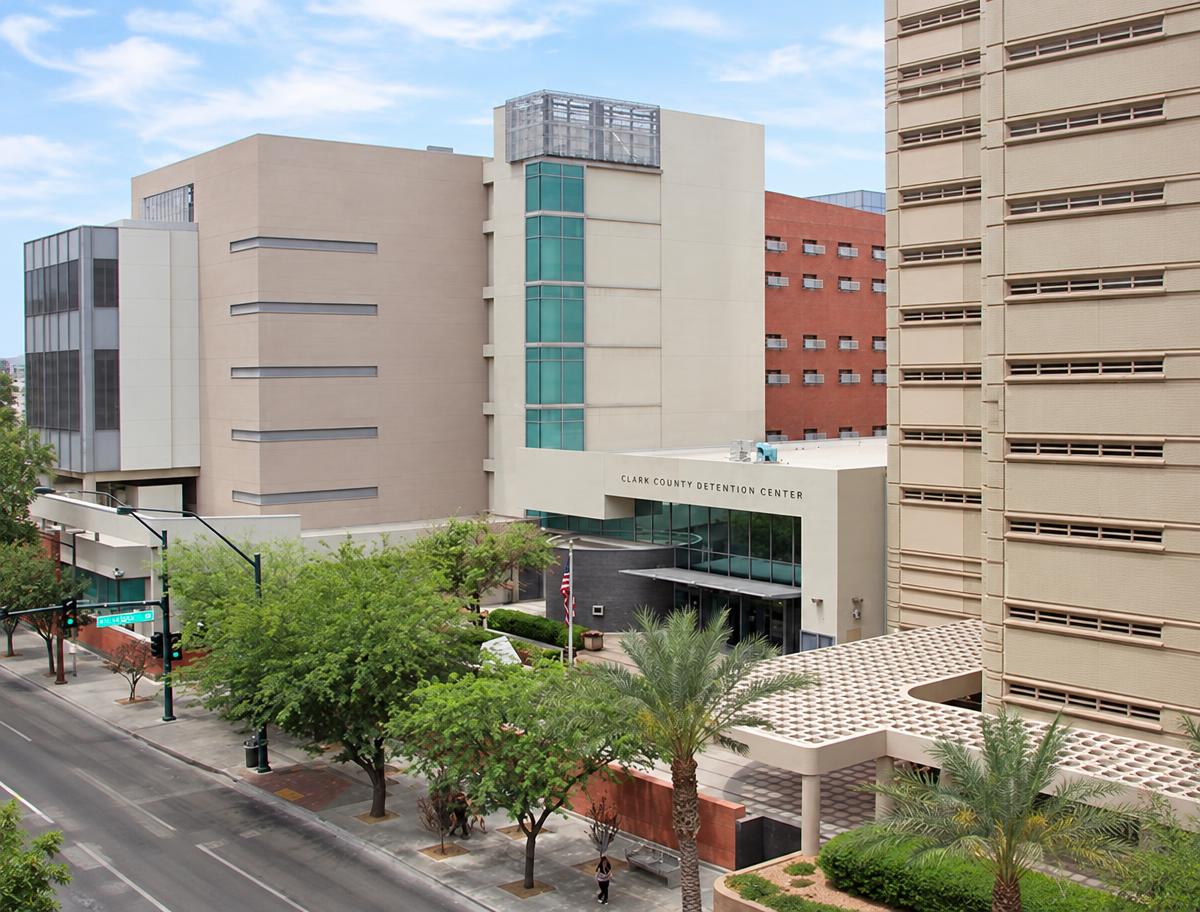
The Clark County Detention Center is the county detention facility in Las Vegas, operated by the Las Vegas Metropolitan Police Department.
If someone you care about may be held at CCDC, start with the official record. This guide explains the verified facility identity, the official in-custody search, how bail works through the courts, and what families can prepare — with government resources clearly separated from our private bail services.
Independent private bail agency · not a government inmate locator. An inquiry does not guarantee acceptance, an available bond or immediate release.
Step 1 / 3
Enter as much as you know.
01 / CCDC facility guide
Verified identity before anything else
The Clark County Detention Center is the county detention facility located at 330 S. Casino Center Blvd in Las Vegas, operated by the Las Vegas Metropolitan Police Department.
The official facility information line is (702) 671-3900. That is a government detention contact — it is not Fast Bail Bonds. Our private bail agency line is (702) 387-5555, and the two serve different purposes.
LVMPD operates CCDC as the Clark County detention facility.
330 S. Casino Center Blvd, Las Vegas, NV — the downtown county detention facility.
(702) 671-3900 is the official facility information line, answered by the government facility — not by any bail company.
02 / CCDC facility guide
The authoritative custody record
The official CCDC in-custody search is the authoritative online record for people held at the facility. Search by the person's name as it was booked; spelling variations and recent bookings can affect results.
A missing result does not prove someone is not in custody — processing takes time and records update on the facility's schedule. When the search shows nothing, call the official facility line to confirm.
Use the county's official in-custody search rather than third-party sites, which can be outdated or wrong.
Clark County — CCDC inmate searchResults depend on how the name was booked. Try legal-name variations before concluding no record exists.
Call (702) 671-3900, the official facility line, to confirm custody directly with the facility.
03 / CCDC facility guide
What generally happens after arrest
Booking generally includes recording identity information, documenting charges, fingerprinting and photographs, and storing personal property. These are common intake steps described in general terms.
Verified facility policies come from LVMPD and Clark County — anything here that goes beyond those official sources is general guidance, not a facility promise.
The person's legal name, identifying details and the arresting officer's charge information are recorded to create the custody file.
Personal belongings such as phones, wallets and jewelry are collected and stored by the facility during custody.
Intake timing depends on facility volume and staffing. No outside party can truthfully promise a booking completion time.
04 / CCDC facility guide
Court orders control — not the facility
Bail eligibility, amounts and any restrictions are set through court processes under Nevada law. The detention facility holds the person; it does not decide bail.
Some circumstances require additional court action before release is possible — for example certain holds or restrictions that only a court can address. Accepted posting methods are confirmed by the facility or the court for the specific case.
Whether bail is available, and on what terms, depends on the charges, the court and applicable law — never on the jail itself.
Nevada law imposes release restrictions in some circumstances, including certain alcohol- and controlled-substance-related arrests.
Nevada Legislature — NRS 178.484Confirm accepted posting methods with the facility or court clerk for the individual case before making payment arrangements.
05 / CCDC facility guide
From confirmed custody to coordinated posting
When bail is authorized, the bond process follows a practical sequence. Each step depends on accurate information from the official record.
Stage 1 of 6
Verify the person is actually held at CCDC through the official in-custody search or the facility line.
Wrong-facility assumptions waste hours — confirm first.
Stage 2 of 6
Collect the legal name as booked and any booking or case identifiers available from the official record.
Exact spelling matters for both the facility and the court.
Stage 3 of 6
Confirm bail is authorized in the case and learn the amount and any restrictions from the court record.
Some cases need court action before any bond can be posted.
Stage 4 of 6
A licensed bail agency prepares the agreement, explains the premium and any collateral, and documents responsibilities.
Nevada premiums are 15% of the bond or $50, whichever is greater, by law.
Stage 5 of 6
The agency coordinates posting through the accepted method for the facility and case.
Posting acceptance is confirmed with the facility or court.
Stage 6 of 6
The facility controls the release process after posting; follow its instructions and the court's appearance requirements.
Release timing varies — no guaranteed clock exists.
06 / CCDC facility guide
Variable timing, honestly explained
Release after posting is a facility process. Timing varies with processing volume, staffing, the time of day and any other holds on the person's record.
Be cautious of anyone who guarantees a release time. The honest answer is that the facility controls release, and families should plan for variability.
Once a bond is accepted, the facility completes its own release process on its own schedule.
A separate hold — from another case or another agency — can delay or prevent release even after bail is posted in one case.
Arrange transportation and communication assuming release could take hours, not minutes.
07 / CCDC facility guide
Current official policies apply
Visitation, phone access and property rules are set by the facility and change over time. The current official LVMPD and county resources are the reliable source for schedules and requirements.
We deliberately do not list visitation hours, fee amounts or allowances here — unsourced schedules go stale and mislead families. Check the official facility information before visiting.
Confirm current visitation rules, scheduling and identification requirements through the official facility resources before traveling.
LVMPD — CCDC facility informationPhone and messaging options are facility-administered; the official resources describe the current providers and rules.
Questions about stored personal property or account deposits are handled through the facility's official channels.
08 / CCDC facility guide
Custody location does not assign the court
Being held at CCDC does not establish which court hears the case. Depending on the charges and jurisdiction, a case may belong to Las Vegas Justice Court, Las Vegas Municipal Court or the Eighth Judicial District Court.
The court record — not the jail record — is the authoritative source for hearing dates, case numbers and appearance requirements.
Handles many felony and gross misdemeanor matters arising in the Las Vegas township.
Las Vegas Justice Court — official siteHandles city-level misdemeanor matters within the City of Las Vegas.
Las Vegas Municipal Court — official siteThe general-jurisdiction trial court for Clark County, including felony cases after early stages.
Clark County — Eighth Judicial District Court09 / CCDC facility guide
Different agencies, different records
The Las Vegas area has several separate detention operations. CCDC is the county facility; the City of Las Vegas, Henderson and North Las Vegas each operate their own, and Pahrump is in Nye County.
Each facility keeps its own custody records. Checking the wrong facility's search is one of the most common reasons families believe someone is not in custody when they are.
The City of Las Vegas facility for city-level arrests, with its own official inmate search.
Henderson's municipal facility with a separate official inmate-information resource.
The North Las Vegas Community Correctional Center operates its own offender search.
10 / CCDC facility guide
Charge-specific guidance from our published guides
People held at CCDC face many different charges, and the bail questions differ by charge type. These published Fast Bail Bonds guides explain the Nevada bail landscape for the most common situations.
Not every charge type is routinely held at CCDC — custody location depends on the arresting agency and the case. These links are charge guidance, not custody claims.
Nevada DUI arrests carry specific release rules, including restrictions in certain impairment circumstances.
DUI bail guideFelony cases move through justice and district courts with higher bonds and more court involvement.
Felony bail guideMisdemeanor cases often move faster but still require accurate court and custody information.
Misdemeanor bail guideDomestic-violence-related arrests carry their own release conditions under Nevada law.
Domestic violence guideDrug charges range widely; the specific allegation drives the court's bail decision.
Drug offense guideAn active warrant or FTA changes the custody picture and often requires court action first.
Warrant guide11 / CCDC facility guide
Helpful details versus legal requirements
Having the right details at hand speeds every conversation — with the facility, the court and a bail agency. None of these are legal requirements to ask for help; they simply make help faster.
0 of 6 details at hand
12 / CCDC facility guide
Direct answers, no guarantees we cannot make
Use the official CCDC in-custody search first. If no record appears, call the official facility line at (702) 671-3900 — the person may still be in processing or held by a different agency.
No. CCDC is the Clark County facility operated by LVMPD. The City of Las Vegas operates its own separate detention center for city-level arrests. They keep separate records.
The court, through Nevada legal processes — never the facility. Eligibility, amounts and restrictions depend on the charges and the court's orders.
Posting acceptance depends on the facility's procedures and the case. Confirm accepted methods with the facility or court clerk; a bail agency can coordinate the practical steps.
A separate hold can prevent release even after bail is posted in one case. Each hold must be addressed with its own authority before release.
It varies with facility processing, staffing and other holds. No one can truthfully guarantee a release time — plan for hours, not minutes.
The person's full legal name as booked, date of birth, and any booking or case number from the official record. Having them speeds everything, but you can call without them.
No. The in-custody search and the facility are government operations. We are a private bail agency and our help is separate from those official resources.
13 / Preparation and answers
Private bail help, clearly separated from government resources
Fast Bail Bonds is an independent private bail agency in Las Vegas. We are not the facility, the court or a government office — and we do not control custody records, bail decisions or release timing.
What we do is explain the process honestly, prepare bond paperwork when bail is authorized, and coordinate posting with the facility. Call any time; the line is answered around the clock.
The authoritative online custody record for the Clark County Detention Center.
County guidance on using the official inmate search and facility information.
The operating agency's official facility page.
Case and calendar information for justice-court matters.
Eighth Judicial District Court information and records.
Current court orders and custody records control the individual case. Any bond transaction depends on lawful authority and case-specific acceptance. Government resources are independent of Fast Bail Bonds.