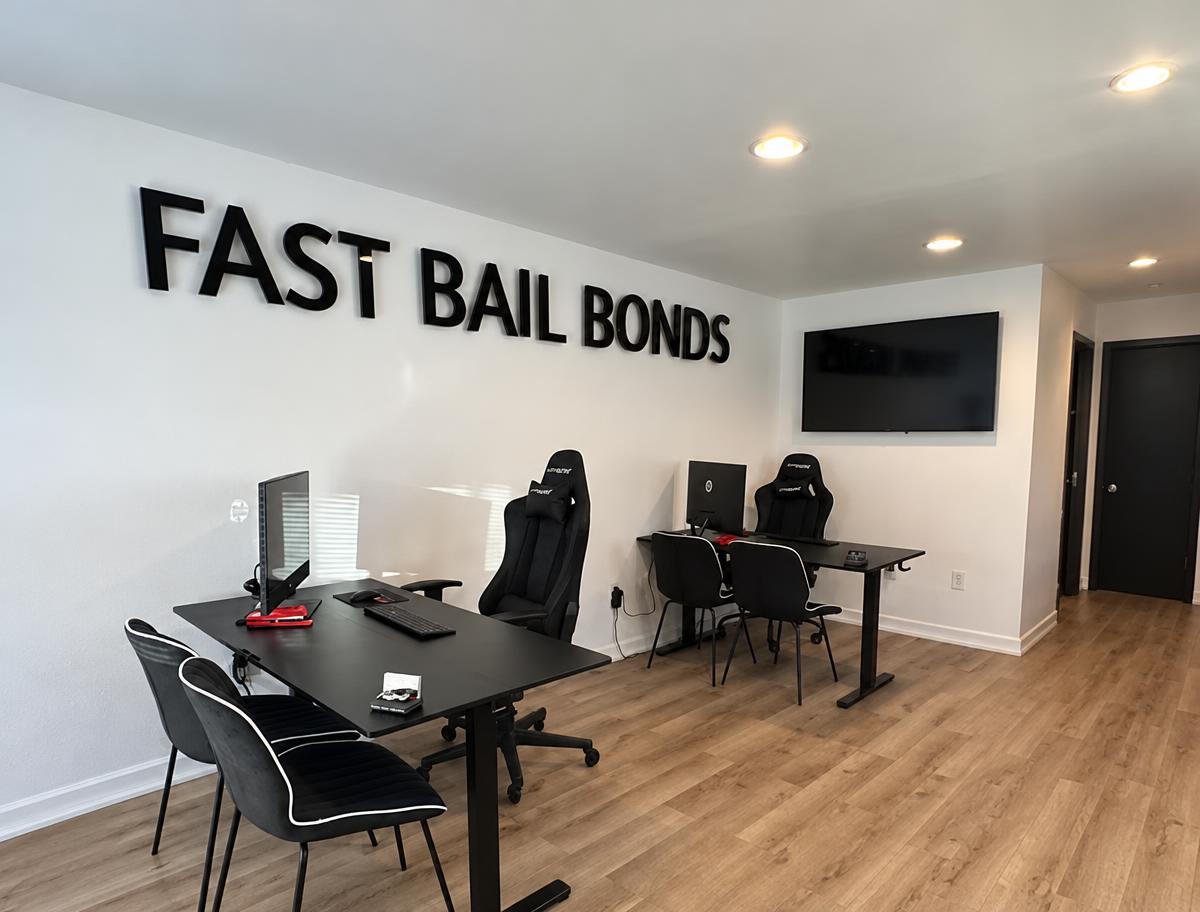
Identify the current detention facility, understand DUI release restrictions and review court-authorized bail and Nevada premiums before arranging a bond.
Independent private bail agency · not a government inmate locator. An inquiry does not guarantee acceptance, an available bond or immediate release.
Step 1 / 3
Who needs to be bailed out?
Enter as much as you know.
01Defendant infoDefendant
02LocationLocation
03Contact infoContact
01 / Nevada DUI guide
Understanding DUI Bail in Nevada
The allegation is only the starting point.
An arrest for driving under the influence begins a criminal process. It does not, by itself, tell a family whether a commercial bond is available. First separate the allegation from the filed charge, the court’s release determination, the authorized bond amount and the premium charged for a commercial bond. Those are different decisions and different numbers.
A commercial bail bond is a way of satisfying an authorized bond through a licensed agent; it is not a decision about guilt or permission to bypass a restriction. The six fundamentals below explain the release transaction. The next section separately explains DUI case types under Chapter 484C. Use the actual booking record and court notice rather than estimating a bond from a short charge description.
01
What DUI bail means
Bail concerns release while the criminal case proceeds. A commercial bond may satisfy authorized security through an agent, but it does not dismiss the allegation or decide guilt.
Practical check: identify the current custody record and release instructions before discussing a transaction.
The recorded DUI charge identifies an allegation. A court’s release determination answers a different question: whether release is permitted and on what conditions.
Practical check: read all current orders and holds. A charge label alone does not establish that bond is available.
Use the amount actually authorized for the case. Conviction penalties, arrest counts and amounts from unrelated cases are not substitutes for a current order.
Practical check: retain the case number, amount and accepting authority’s instructions. A pending decision is not an authorized bond.
The bond amount is the court’s security; the premium is the commercial fee. Nevada’s generally required premium is 15% of the bond or $50, whichever is greater.
Practical check: separate the full premium, any actual initial payment, collateral and permitted expenses in the written agreement.
Specified alcohol and drug-related circumstances have separate release restrictions. Satisfying one restriction does not clear other holds or authorize posting.
Practical check: ask which subsection applies and whether its conditions are satisfied. Neither a threshold nor elapsed time promises release.
A licensed agent handles an accepted, authorized bond transaction and explains the written obligations. The agent cannot override the court, decide disputed history or restore driving privileges.
Practical check: confirm lawful authority, case acceptance, premium, collateral and signer responsibilities before committing.
These are situations that may be reviewed for a bail inquiry, not a promise that Fast can write a bond for every listed charge. Court authorization, statutory restrictions, the accepting authority and the company’s legal authority and underwriting decision all need confirmation. A family can begin with incomplete information; no one should promise acceptance before those checks are complete.
01
First-offense DUI
Under NRS 484C.400, a first qualifying offense within seven years is a misdemeanor, subject to the statute’s express exceptions. Death, substantial bodily harm or specified prior history can place a case under different provisions.
Fast must verify identity, current custody, the actual charge, an authorized amount and any impairment restriction. Court review or a separate hold can still prevent immediate posting.
A second qualifying offense within seven years is a misdemeanor under NRS 484C.400, subject to its exceptions. Conviction penalties do not determine the amount or conditions of pretrial bail.
Fast must check the current release order and separate cases or warrants. Ask counsel about disputed history; an agent’s inquiry cannot decide whether a prior conviction legally qualifies.
A third qualifying offense within seven years is a category B felony under NRS 484C.400, subject to its exceptions. NRS 484C.410 separately covers specified prior felony or homicide convictions, including certain reduced felonies, or a person currently in treatment under NRS 484C.340; not all priors expire after seven years.
Felony does not categorically mean no bail. Confirm the charged subsection, court determination and other holds. Arrest counts are not qualifying conviction counts; when bond is not authorized, judicial authorization comes first.
An allegation involving a controlled substance or combined impairment calls for a different release-restriction check than an alcohol-only case.
Fast must verify the applicable statutory restriction with the holding authority, including the referenced minimum twelve-hour rule when applicable. That interval is not a promised release deadline.
Commercial driving has distinct statutory standards and licensing implications. The criminal record and any DMV notice must be considered separately.
Fast must confirm the actual allegation and authorized bond, not infer eligibility from the person’s occupation. Counsel and DMV, not the bond transaction, address permission to drive.
NRS 484C.430 addresses specified impaired-driving conduct that proximately causes death or substantial bodily harm, not every injury. NRS 484C.440 separately punishes vehicular homicide defined in NRS 484C.130.
Fast must confirm the current court order, filed charges and other holds. Do not assume a routine scheduled amount; additional court authorization may be necessary.
The charge alone does not determine whether a bond can be posted. The actual custody record, statutory restrictions and court orders control. Even an authorized bond is not a guarantee that a particular agency can accept the transaction or that the facility will finish processing at a particular time.
Ask for the status of every case or hold, not just the DUI entry. If two records disagree, the responsible court or holding authority must clarify the current instruction. A bail inquiry is not a substitute for that decision, and paying a premium cannot override a legal restriction.
01
Conditional opportunity
Bond may be possible
An authorized bond exists, no current restriction prevents posting and the holding authority accepts the required bond. Fast must also be legally and operationally able to accept the case.
Next action: confirm the amount, accepting office and written transaction terms before arranging authorized posting.
02
Verify before payment
Additional clearance is required
An impairment restriction, pending judicial determination, unresolved warrant, separate hold, incomplete booking identity or required release condition may need clarification.
Next action: identify the precise restriction and which authority can resolve it. A pending court decision is not a bond that has already been authorized.
03
No immediate posting
We cannot post an immediate bond
No bond is authorized, a valid judicial order prohibits release, another legal hold prevents release, an applicable statutory restriction remains unsatisfied or Fast cannot accept the transaction.
Next action: seek the current instructions from the responsible authority and qualified counsel. Do not promise that a fee or a call will remove the restriction.
NRS 178.484 contains impairment-related restrictions on admission to bail or release on recognizance for specified offenses. The alcohol and drug-related provisions are not the same rule. Confirm the cited offense, applicable subsection and current instructions directly with the holding authority; an arrest timestamp alone cannot answer those questions.
The less-than-0.04 breath-alcohol release threshold is different from the 0.08 offense standard in the pre-federal-repeal version of NRS 484C.110. Impairment can itself be unlawful without reaching that offense concentration. The drug-related minimum runs twelve hours after arrest in the specified circumstances, not after booking or payment. Neither rule promises a release time.
01
Breath alcohol: less than 0.04
Alcohol impairment
For a person under the influence of intoxicating liquor arrested for an offense listed in NRS 178.484(5), bail admission or release on recognizance requires breath alcohol less than 0.04. Exactly 0.04 does not satisfy it; this is not the offense threshold.
Listed driving offenses are NRS 484C.110, .120, .130 and .430; specified boating offenses are also listed. The release-condition breath test is not admissible evidence against the person. Other holds and authorization still require checking.
For the listed offenses, NRS 178.484(6) applies to controlled-substance influence, liquor plus a controlled substance, or specified chemical, poison or organic-solvent use to a degree preventing safe driving or physical control. It bars bail admission or recognizance release sooner than twelve hours after arrest.
The subsection states no early-release exception. This is not a universal twelve-hour DUI hold or release appointment. If both impairment provisions apply, elapsed time does not waive the breath restriction or other holds.
Warrants, probation or parole restrictions, other pending cases and specific judicial orders may create independent barriers to release. Their application depends on the actual record.
The end of an impairment restriction does not clear other holds, authorize a bond, guarantee acceptance or set the facility’s processing time.
The amount and conditions must come from an applicable court decision or current official procedure for the individual case. There is no single DUI amount quoted on this page. A schedule from a different court or an older case may not apply; confirm the present order before arranging a bond.
NRS 178.4851 requires the least restrictive means necessary for community safety or appearance, subject to its first-degree-murder exception. A prosecutor requesting bail must prove necessity by clear and convincing evidence; the court must make findings and state its reasoning. NRS 178.4853 lists factors the court must consider at a minimum. First-offense status or BAC alone does not establish an authorized amount.
01
Classification and conduct
Use the filed statute and allegation, not a guessed misdemeanor or felony label. Different allegations may require different proceedings.
02
Qualifying prior convictions
Actual qualifying history can matter. The number of arrests is not a reliable substitute for the statutory conviction analysis.
03
Injury or death allegations
Confirm the charged injury provision and whether the court has made a release determination. Do not assume a routine scheduled amount.
04
Additional charges and holds
The DUI bond may not resolve another warrant, case or supervision hold. Ask which restrictions would remain after posting.
05
Appearance and safety review
Court consideration of appearance and community-safety issues is separate from an agent’s agreement. Conditions may accompany an authorized bond.
06
Court and jurisdiction
Use the actual named court and current order. A Las Vegas mailing address does not select a court or a bail schedule.
NRS 697.300 is the official reference for Nevada’s generally required premium of 15% of the bond or $50, whichever is greater. The table and shared calculator use hypothetical bond amounts. They are not typical DUI bail amounts, charge-specific estimates, a quote or approval of a financial arrangement.
Ask for the complete written terms before committing. Collateral is separate from premium. NRS 697.300 limits actual expenses to specified categories; a written contract alone does not authorize an added financing or processing fee. Identify any government filing charge separately and confirm the applicable process.
Hypothetical bond / illustrative premium
Examples only — not typical DUI amounts or quotes
Example bond
Illustrative premium
$1,000
$150
$2,500
$375
$5,000
$750
$10,000
$1,500
$20,000
$3,000
$50,000
$7,500
15% of the example bond or $50, whichever is greater. Collateral and permitted actual expenses are separate.
Illustrative calculation / not a quote
Nevada Bail Bond Cost Calculator
Nevada premium: 15% of the bond or $50, whichever is greater. Initial payment is optional illustration only, not an offer.
Nevada illustrative premium · fixed rate
15%$50 minimum
Total example premium$3,000.00
15% of the example bond, subject to the $50 minimum. Collateral and permitted actual expenses are separate.
Initial payment$750.00
Remaining premium balance$2,250.00
Initial payment Remaining balance
Illustrative calculation only. Actual premiums, expenses, collateral, and payment arrangements require confirmation. This is not a quote or financing offer. An initial payment reduces the premium balance; it does not change the total premium. See the official Nevada premium statute.
The authorized bond amount concerns the court’s security for release. The premium is the commercial fee for the bond, not the entire court amount.
02
Premium versus initial payment
A hypothetical initial payment changes the illustrated balance, not the total premium. Written terms decide whether any payment arrangement is actually available.
03
Collateral and indemnity
Collateral may secure contractual obligations and is separate from the premium. Understand custody, return conditions and each signer’s potential liability before agreeing.
04
Written payment arrangements
No down-payment tier or financing approval is promised here. Ask what the actual case agreement requires, including the total owed and any permitted expenses.
05
Refund and forfeiture questions
Do not assume release, dismissal or a missed court date automatically refunds the premium. Contract terms, applicable law and the court’s bond status require separate review.
06
Government and separate expenses
Ask who receives each charge and what authorizes it. This page does not quote a current CCDC filing fee or combine an unverified government fee with the premium.
Families often have only a name and an arrest location at the beginning. Work through the record checks in order rather than guessing the jail, charge level or bond amount. The sequence below explains preparation for an authorized transaction; it does not promise that every case will proceed to posting.
01
Stage 1 of 6
DUI arrest and identification
Match the defendant’s full legal name and available identifying information. A spelling variation or incomplete booking entry can make a search inconclusive.
Family’s next action: collect the name, approximate arrest time and known booking identifier without sending unnecessary sensitive information.
02
Stage 2 of 6
Find the current authority
Verify the arresting agency and present facility. A person may be booked into a city facility, county facility or transferred between authorities.
Family’s next action: use the correct official search and confirm a missing or changing record with the relevant authority.
03
Stage 3 of 6
Check restrictions and holds
Identify the applicable impairment restriction, court orders and separate holds. Clearing one restriction does not clear every custody issue.
Family’s next action: ask what currently prevents release and which court or agency is responsible for the next determination.
04
Stage 4 of 6
Confirm the authorized bond
Read the current bond amount and accepting authority’s instructions. A pending decision or a penalty listed in an article is not an authorized bond.
Family’s next action: retain the case number, court name and current release instructions for the inquiry.
05
Stage 5 of 6
Review terms and posting
Review the lawful premium, any collateral, permitted expenses and written signer obligations. Authorized posting follows acceptance of the actual transaction.
Family’s next action: ask for a full explanation of the agreement before signing or arranging payment.
06
Stage 6 of 6
Release processing and obligations
The facility processes release when permitted. The defendant must follow the court’s orders and appearances; the bond does not resolve the DUI allegation.
Family’s next action: save the release papers, hearing information and separate DMV notices. No processing time is guaranteed.
Four separate resources. One current custody record.
An arrest described as “Las Vegas DUI” does not establish CCDC custody. The arresting agency, city boundaries, booking arrangements and later transfers can matter. These official resources are references, not assignments of where a particular person is held. Fast’s inquiry form is not an official government inmate locator and does not search these systems for you.
Begin with the full legal name and known booking number. Check the agency’s official record, compare identifying details and save the current facility and charge information. If no matching record appears, a recently incomplete entry or transfer is possible; contact the relevant authority rather than concluding that the person was released. Recheck the current record before arranging any posting.
01
Clark County Detention Center
County detention resource operated through LVMPD. The county inmate search is separate from City Jail and municipal detention records.
Look for the matching identity, current custody status and available booking information. A CCDC result does not assign every associated hearing to one court.
City of Las Vegas Department of Public Safety detention operation. Its official inmate search is a different system from CCDC.
Use the city record when that is the identified holding authority. Confirm transfers and current posting instructions rather than relying on an old search result.
City of Henderson detention resource with a separate inmate-information service. A Henderson incident alone does not prove a current Henderson booking.
Use the official identity and custody information, and confirm current posting instructions directly with the facility.
A courthouse, a police agency and a jail are different.
Read the citation, case notice or court record to identify the court, department and next appearance. Municipal courts, township Justice Courts and District Court have different roles. Not every DUI arrest with a Las Vegas address belongs to Las Vegas Municipal Court, and Henderson or North Las Vegas incidents must not automatically be assigned to the same venue.
A courthouse address is a building location, not a jurisdictional ruling. The Regional Justice Center houses different court operations. The detention facility accepts custody or bond paperwork under its own instructions, while the named court controls the case and its orders. Ask counsel or the court to resolve conflicting notices.
01
Municipal court matters
City municipal courts handle appropriate city misdemeanor matters within their jurisdiction. Confirm the actual city court named on the citation; do not infer it from a mailing address.
Retain the court name, case number and hearing instructions. Las Vegas Municipal Court is one reference, not the destination for every valley DUI.
Assigned felony proceedings may move into the Eighth Judicial District Court. Felony classification does not itself supply the current bond amount or release conditions.
Confirm the case’s present court and department, especially after a transfer in proceedings. A hearing notice is more useful than a generic court-location search.
Posting bail does not dismiss a DUI charge, restore a driver’s license or replace a DMV process. Criminal court instructions and administrative licensing notices can run separately. Save both sets of paperwork and obtain qualified advice about the actual deadlines and requirements; this page does not calculate a case-specific appeal deadline.
01
Court and criminal case
The court controls bail authorization, required appearances and ordered conditions. Alcohol, travel or monitoring restrictions may apply when actually ordered; they are not identical for every arrestee.
Read the release order word for word. A violation or missed hearing can have serious consequences, including a warrant or bond proceedings. Ask counsel about anything unclear before acting.
Administrative revocation, ignition-interlock requirements when applicable, restoration and appeal procedures follow the relevant licensing rules and notices.
The Nevada DMV’s DUI guidance explains this separate process. Do not drive merely because someone paid for a bond or because the facility completed release.
Clear questions. Written obligations. No shortcuts promised.
Fast Bail Bonds is an independent private bail agency, not a police department, court or detention facility. The topics below are questions to discuss during an inquiry, not verified exclusive advantages, staffing promises or universal case acceptance. Bring the current record and ask about the actual agreement.
Fast Bail Bonds · Independent private agency
01
A DUI-focused inquiry
Keep impairment restrictions, authorized bond and other holds in view instead of treating the DUI label as a complete eligibility answer.
02
The right custody questions
Bring the agency and current official record so the inquiry starts with the correct authority rather than an assumed jail assignment.
03
Nevada premium clarity
Discuss the statutory premium reference and keep an illustrative calculator result separate from an actual transaction quote.
04
Written signer obligations
Ask for a clear explanation of premium, collateral, indemnity and any offered payment arrangement before committing.
05
Authorized paperwork
Confirm acceptance and posting instructions for the actual bond. Paperwork cannot override a court order or statutory restriction.
06
Practical next steps
Keep court notices and DMV requirements visible after release. Call the confirmed Fast number to discuss available information, without assuming a response-time guarantee.
You do not need every detail before calling. A name and the information already available can start the conversation. Official records may still be incomplete after an arrest; describe what is confirmed and what is only a best guess.
Keep Social Security numbers, payment-card information and unnecessary medical details out of the initial form. An inquiry does not guarantee acceptance or create an official inmate-search result. Sensitive transaction information should only be handled through an appropriate verified process when actually needed.
These answers explain what to verify, not how a court will decide an individual case. Current statutory text, court orders, custody records and the actual transaction agreement take priority over general educational information.
01Can I bail someone out after a first DUI in Nevada?
Possibly, when a bond is actually authorized, applicable release restrictions are satisfied and the transaction can be accepted. A first-offense label does not establish an amount, eliminate other holds or promise immediate posting. Begin with identity, the current facility and the actual release record.
02Can someone be bonded out after a second DUI?
A second-offense description does not automatically answer the bail question. Confirm the current court order, qualifying history as determined in the case and any separate custody holds. Conviction-penalty provisions are not a bond schedule, and company acceptance remains a separate check.
03Is a third DUI automatically non-bondable?
No categorical no-bail rule is established here from the phrase third DUI. Felony classification and qualifying convictions can affect proceedings, but the actual statutory restrictions and judicial order control release. Ask counsel and the responsible court about the specific case before assuming an authorized bond exists.
04Why has someone not been released after a DUI arrest?
Possible issues include an applicable impairment restriction, incomplete booking, a pending court decision, a separate warrant or hold, an unsatisfied release condition or facility processing. Ask what currently prevents release and which authority can resolve it. A premium payment cannot remove a legal hold.
05Is there a mandatory twelve-hour DUI hold?
Not for every DUI arrest. For the listed offenses and specified controlled-substance, combined liquor/controlled-substance or chemical/poison/solvent circumstances, NRS 178.484(6) bars bail admission or recognizance release sooner than twelve hours after arrest. It states no early-release exception. The alcohol provision is a separate check; twelve hours does not guarantee release.
06How do I find someone arrested for DUI in Las Vegas?
Start with the full legal name, known booking identifier and arresting agency. CCDC, City Jail, Henderson and North Las Vegas have separate official resources. Match identity and the present facility; if a record is missing or changed, ask the relevant authority about booking or transfer rather than assuming release.
07Can someone facing a felony DUI receive bail?
Felony is a classification, not a complete release decision. Confirm whether the court has authorized bond, whether statutory restrictions or other holds apply and whether the transaction can be accepted. An injury allegation or qualifying history may require careful judicial review; immediate scheduled release must not be assumed.
08What happens if DUI caused substantial bodily harm?
The filed injury allegation and applicable Chapter 484C provision require careful legal review. Obtain the actual charge and current court order rather than using a routine DUI amount. This guide cannot decide guilt, predict the court’s conditions or guarantee that a bond is available.
09How much does a DUI bail bond cost in Nevada?
The shared illustration applies the generally required NRS 697.300 premium of 15% of an authorized bond or $50, whichever is greater. For a hypothetical $10,000 bond, the illustrated premium is $1,500. That does not mean DUI bail is $10,000. Collateral, lawful expenses and any written payment terms require separate confirmation.
10Can a bond be posted before the first court appearance?
Only when the applicable authority has actually authorized it and release restrictions permit posting under the current instructions. Some records may require a court determination first. Do not substitute a scheduled hearing date, a general article or a penalty amount for present bond authorization.
11Does posting DUI bail restore a driver’s license?
No. Release in the criminal case does not automatically restore driving privileges or resolve an administrative revocation. Follow the actual DMV notice and obtain qualified advice about interlock, appeal or restoration requirements. Do not assume a release paper authorizes driving.
12What happens if the person misses a court date?
A missed required appearance can lead to a warrant and bond-forfeiture proceedings, with potential contractual consequences for signers. Contact counsel and the named court promptly about the actual record and instructions. Do not assume paying another fee cures the missed hearing or cancels a warrant.
13Does clearing an impairment restriction guarantee immediate release?
No. The authority must also confirm bond authorization, other holds, required conditions and completed posting or release paperwork. The facility controls processing. A threshold or elapsed interval addresses only the applicable restriction, not every step in the release process.
14Can I call before I have the booking number?
Yes, start with what you know, including the full legal name, known agency and your contact information. Identify uncertain details as uncertain. Do not send Social Security numbers or payment-card details through an initial inquiry; it is not an official locator or a guarantee of acceptance.
Use the Nevada statutes for legal references, the named court for case instructions and the current detention record for custody information. Government websites are independent of Fast Bail Bonds; the related Fast guides provide additional educational context, not official records.
Current court orders and custody records control the individual case. Any bond transaction depends on lawful authority and case-specific acceptance. Government resources are independent of Fast Bail Bonds.