
Civil Infraction: No Commercial Bail
An ordinary civil speeding ticket is handled through the civil citation process. No commercial bail bond is required.
NRS 484A.703
Las Vegas, Nevada / criminal traffic information
Civil ticket or criminal charge? The distinction comes first.
Understand Nevada criminal traffic allegations, current classifications and court-authorized release without confusing ordinary civil tickets with commercial bail.
Independent private bail agency · not a government inmate locator. An inquiry does not guarantee acceptance, an available bond or immediate release.
Step 1 / 3
Enter as much as you know.
01 / Nevada traffic guide
A civil ticket and a criminal traffic case require different answers.
Most ordinary Nevada traffic tickets are civil infractions, not criminal charges. AB 116, enacted in 2021, established the civil framework reflected in NRS 484A.703–484A.705. A civil infraction does not carry jail or require a commercial bail bond. A fine, administrative assessment or other citation fee is not a bail amount.
This guide concerns criminal traffic allegations and criminal traffic warrants where a court-authorized bond may apply. Reckless driving, eluding, certain hit-and-run conduct and specified revoked-license offenses require review of the exact statute and subsection. A serious collision does not by itself establish a particular criminal charge or authorize a bond.
Keep the charge classification, the court’s release order and the consequences after conviction separate. A misdemeanor, gross misdemeanor or felony label is not a bond quote. A sentencing fine is not the premium paid to a bail agency, and posting a bond does not dismiss the allegation.
Fast Bail Bonds helps Las Vegas and Clark County families understand the next steps after an actual criminal traffic arrest. Verify the booking record, issuing court and every active hold before considering an ordinary surety bond. Only the court and applicable custody authority can determine whether release is permitted.
An ordinary civil speeding ticket is handled through the civil citation process. No commercial bail bond is required.
NRS 484A.703The same chapter contains different offense classes. Identify the precise allegation and current release order.
NRS 178.484A deposit required before contesting a civil ticket is a procedural court deposit, not commercial bail.
NRS 484A.704102 / Nevada traffic guide
Eight case types, without assuming a bond exists.
These categories describe allegations families may encounter. They are not findings of guilt, universal arrest rules or promises that a particular charge can be bonded. Read the current citation, complaint and court order rather than relying on a shorthand booking label.
Willful or wanton disregard, speed contests, organizing, trick-driving displays and facilitating displays have distinct statutory branches and penalties. Serious harm or death can change the classification.
NRS 484B.653Willful failure to stop or fleeing after the required police signal begins with a misdemeanor framework; damage, danger, injury, death and a same-transaction DUI conviction have distinct consequences.
NRS 484B.550Failure to meet the stopping duties after an injury or fatal crash is a Category B felony under NRS 484E.010. Each injury or death is a separate offense under subsection (3).
NRS 484E.010Attended-property damage duties differ from unattended-property duties. NRS 484E.020 is a misdemeanor provision; NRS 484E.040 and NRS 484E.050 address unattended property.
NRS 484E.020NRS 483.560(2) applies to specified DUI-related revocations and has mandatory alternatives and a crucial expired-revocation-period exception.
NRS 483.560Confirm the actual statute. Not every ticket is criminal, and some misdemeanors may be treated as civil infractions at the prosecutor’s election, with statutory exclusions.
NRS 484A.7049An outstanding criminal warrant requires issuing-court status verification. An unpaid civil ticket’s default is not criminal failure to appear.
NRS 484A.704Separate charges, warrants or holds may require independent clearance. A bond on one count does not automatically resolve the others.
NRS 178.48403 / Nevada traffic guide
Identify the legal track before discussing money.
A court may authorize bail on a criminal traffic charge under the applicable Nevada release framework. That does not convert a civil infraction into a criminal case. The presence of a warrant also does not tell you whether a surety bond has been authorized or whether other restrictions remain.
The three states below use words as well as visual contrast. “No bond required” means no commercial bail bond for the civil infraction; it does not mean the ticket can be ignored or that the court cannot require the distinct civil contest deposit.
CIVIL INFRACTION — NO BOND REQUIRED
NO BOND REQUIRED. No commercial bail bond or jail for the civil infraction. Follow the response and contest procedure; any NRS 484A.7041 court deposit remains separate.
NRS 484A.7041CRIMINAL CHARGE — COURT-AUTHORIZED BAIL MAY APPLY
COURT-AUTHORIZED BAIL MAY APPLY. Verify the release order, accepted bond type and all separate holds. Agency willingness does not replace legal authorization.
NRS 178.484OUTSTANDING CRIMINAL WARRANT — VERIFY STATUS
VERIFY STATUS. Contact the issuing court or an attorney about the actual warrant and required appearance. A bondsman cannot remove or recall it.
NRS 178.48404 / Nevada traffic guide
Civil procedure is not pretrial criminal release.
AB 116 changed the treatment of most ordinary Nevada traffic violations. NRS 484A.703–484A.705 govern the civil framework. A civil citation can still require a response and payment or a contest, but the civil penalty is not a criminal bail amount. Read the instructions on the actual citation and the court’s current directions.
NRS 484A.704 provides the 90-calendar-day response framework and civil default consequences. Civil default is not a criminal failure-to-appear offense and is not a criminal bench warrant. Do not treat an unpaid civil ticket as automatic grounds to buy a bond.
NRS 484A.7041 permits the court to require a bond or cash deposit before a person contests a civil infraction. Its amount cannot exceed full payment of the civil penalty, administrative assessment and citation fees. Despite the statute’s use of “bond,” this procedural court deposit is not a commercial bail bond. A person the court determines cannot afford the costs of defending the action, or who is a qualifying legal-aid client, must not be required to post that deposit. Ask the court about its accepted payment method and procedure; the calculator below does not price that deposit.
NRS 484A.7049 permits prosecutor election to treat some misdemeanors as civil infractions, excluding violations of NRS 484C.110 and NRS 484C.120. That election is not a driver’s choice and should not be assumed from the appearance of the ticket.
Parking citations have a separate rule under NRS 484A.700. For an unsigned citation identifying a vehicle by license plate, notice must be mailed within 60 days and the no-appearance period is 20 days. No warrant may issue if that notice is undeliverable. This limited parking rule is not the ordinary civil-default rule and must not be generalized to unpaid civil speeding tickets.
Identify the court, citation number, response instructions and whether the matter is civil or criminal. An agency inquiry is not a court response.
NRS 484A.704The cap uses civil penalty plus administrative assessment and citation fees. No 15% commercial premium is calculated on that amount.
NRS 484A.7041The unsigned vehicle-by-plate notice and appearance rules must be satisfied; undeliverable notice prevents the warrant.
NRS 484A.70005 / Nevada traffic guide
Current offense branches must not be collapsed into one penalty.
NRS 484B.653(1) distinguishes (a) willful or wanton disregard, (b) an unauthorized speed contest, (c) organizing such a contest, (d) a trick-driving display and (e) facilitating a display. Violations of (1)(a), (1)(b), (1)(d) or NRS 484B.550(1) constitute reckless driving. The tables use the current amended statute, not an older generic reckless-driving summary.
Under NRS 484B.653(3), a violation of (1)(a) is a misdemeanor. The statute allows the stated fine or both fine and imprisonment of not more than six months. Subsection (4) addresses (1)(b)/(c) and reckless driving under subsection (2), adding the specified community-service requirements and possible jail. Subsection (6) classifies trick driving as a gross misdemeanor; facilitating under (7) changes class after the first offense.
NRS 484B.653(5) applies to subsection-(4) offenses: license suspension of six months to two years and surrender. For speed contests, involving a vehicle registered to the offender and used in the offense, a court may order 15-day vehicle impoundment for the first offense; for a second or subsequent offense it must order 30-day impoundment. These consequences are not bail terms or premium charges.
Under NRS 484B.653(9), willful or wanton act or neglect proximately causing death or substantial bodily harm is a Category B felony. The ordinary term is one to six years, with a $2,000–$5,000 fine. Driving 50 mph or more over the limit, or the applicable pedestrian-safety, school-zone or school-crossing-zone circumstances, increases the term to one to ten years with the same fine range. The greater-penalty qualification under NRS 484B.550(4) remains controlling when applicable.
Willful/wanton driving and contest-related offenses are not the same branch as trick driving or repeat facilitation.
NRS 484B.653License suspension, impoundment, service hours and imprisonment are sentencing consequences—not court-set bail figures.
NRS 484B.653Causation and statutory enhancement conditions matter. No generic bail range is inferred from a Category B label.
NRS 484B.653| Provision / classification | Exposure after conviction |
|---|---|
| NRS 484B.653(3), (1)(a) — first offense; misdemeanor | $250–$1,000 fine OR fine and jail ≤6 months. |
| NRS 484B.653(3), (1)(a) — second offense; misdemeanor | $1,000–$1,500 fine OR fine and jail ≤6 months. |
| NRS 484B.653(3), (1)(a) — third or later offense; misdemeanor | $1,500–$2,000 fine OR fine and jail ≤6 months. |
| NRS 484B.653(4), (1)(b)/(c) or reckless under (2) — first; misdemeanor | $250–$1,000 fine; 50–99 hours community service; possible jail ≤6 months. |
| NRS 484B.653(4), (1)(b)/(c) or reckless under (2) — second; misdemeanor | $1,000–$1,500 fine; 100–199 hours community service; possible jail ≤6 months. |
| NRS 484B.653(4), (1)(b)/(c) or reckless under (2) — third or later; misdemeanor | $1,500–$2,000 fine; 200 hours community service; possible jail ≤6 months. |
| NRS 484B.653(5) — subsection-(4) offenses | License suspension 6 months–2 years and surrender. Speed contest: first offense discretionary 15-day impoundment; second or later mandatory 30-day impoundment. |
| NRS 484B.653(6), (1)(d) — first; gross misdemeanor | $1,000–$1,500 fine; 100–199 hours community service; possible jail ≤364 days. |
| NRS 484B.653(6), (1)(d) — second or later; gross misdemeanor | $1,500–$2,000 fine; 200 hours community service; possible jail ≤364 days. |
| NRS 484B.653(7), (1)(e) — first; misdemeanor | Fine ≤$1,000; 50–99 hours community service; possible jail ≤6 months. |
| NRS 484B.653(7), (1)(e) — second or later; gross misdemeanor | $1,000–$1,500 fine; 100–199 hours community service; possible jail ≤364 days. |
| NRS 484B.653(9) — death or substantial bodily harm; Category B felony | 1–6 years AND $2,000–$5,000 fine. Enhanced: 1–10 years AND same fine, for 50+ mph over limit or applicable pedestrian-safety/school-zone circumstances. Unless greater penalty under NRS 484B.550(4). |
06 / Nevada traffic guide
The required signal and the consequence branch both matter.
NRS 484B.550(1) addresses willful failure to stop or fleeing after a police signal and establishes the misdemeanor branch. Subsection (2) specifies a flashing red lamp and a siren. Do not substitute a general description of police presence for the required statutory signal.
Property damage or endangerment under subsection (3) is a Category B felony with one to six years OR a fine of not more than $5,000 OR both, unless NRS 484B.653 applies. Death or bodily harm under subsection (4) is a separate Category B felony with two to twenty years OR a fine of not more than $50,000 OR both.
A conviction under NRS 484C.110 or NRS 484C.120 in the same transaction brings subsection (5)’s Category D framework under NRS 193.130. DUI has its own Chapter 484C rules and separate guide; this page does not duplicate that master or treat all eluding allegations as DUI.
An alleged failure to stop requires legal review of the signal, conduct, resulting circumstances and charged subsection. A bail agency cannot assess defenses, reduce the charge or promise the court will permit a particular release option.
Flashing red lamp plus siren under subsection (2). The charged facts and counsel’s review remain important.
NRS 484B.550Subsection (3) yields where NRS 484B.653 applies; subsection (4) has its own death/bodily-harm exposure.
NRS 484B.550| Provision | Classification and sentencing |
|---|---|
| NRS 484B.550(1)/(2) | Misdemeanor: willful failure to stop/flee after signal consisting of flashing red lamp plus siren. |
| NRS 484B.550(3) | Category B felony: 1–6 years OR fine ≤$5,000 OR both; property damage/endangerment, unless NRS 484B.653 applies. |
| NRS 484B.550(4) | Category B felony: 2–20 years OR fine ≤$50,000 OR both; death or bodily harm. |
| NRS 484B.550(5) | Category D felony under NRS 193.130: same-transaction conviction under NRS 484C.110 or NRS 484C.120. |
07 / Nevada traffic guide
Stopping, information and aid duties are separate obligations.
NRS 484E.010 governs crashes involving injury or death. The Category B penalty under subsection (3) is two to twenty years and a $2,000–$5,000 fine. Each injury or death is a separate offense under that subsection; the sentence may not be suspended and probation may not be granted. These are conviction consequences, not a statement that bail is always unavailable before trial.
NRS 484E.020 covers stopping after a crash involving damage to an attended vehicle or other attended property and is a misdemeanor provision. NRS 484E.030 separately requires information and aid and is also a misdemeanor provision. Stopping alone does not necessarily satisfy every applicable duty.
Unattended-vehicle and other-property duties are addressed separately in NRS 484E.040 and NRS 484E.050. Do not apply the injury/death felony label automatically to every property-damage incident. The actual allegation, duty and circumstances determine the legal analysis.
After an arrest, confirm the listed charges and court. Families should not send collision narratives, alleged evidence, passwords or sensitive identity documents through a public inquiry. Legal defenses and the merits of any crash allegation belong with a Nevada criminal defense attorney.
Separate victim counts and the no-probation/no-suspension sentencing rule require careful review.
NRS 484E.010NRS 484E.020 stopping duties and NRS 484E.030 information/aid duties remain distinct.
NRS 484E.020Read NRS 484E.040 and NRS 484E.050 rather than assuming every crash is an injury/death felony.
NRS 484E.040| Provision | Duty and classification |
|---|---|
| NRS 484E.010(3) | Failure to stop/remain after injury/death crash: Category B felony, 2–20 years AND $2,000–$5,000 fine. Each injury/death separate; sentence cannot be suspended; no probation. |
| NRS 484E.020 | Attended-property crash stopping duties — misdemeanor. |
| NRS 484E.030 | Information and aid duties — misdemeanor. |
| NRS 484E.040 / NRS 484E.050 | Separate duties involving unattended vehicle or other property. Read applicable provision; no automatic injury/death felony label. |
08 / Nevada traffic guide
Revocation grounds and the period’s status must be verified.
NRS 483.560(1) provides the general misdemeanor framework for driving while a license is cancelled, revoked or suspended. Subsection (2) addresses specified DUI-related revocations: NRS 484C.110, NRS 484C.120, NRS 484C.210, NRS 484C.430, qualifying DUI homicide and comparable out-of-state offenses. Do not use the enhanced branch for every suspension.
For the specified subsection-(2) branch, the alternatives are thirty days to six months in jail OR sixty days to six months in residential confinement, AND a $500–$1,000 fine. Probation and suspension of sentence are not available under that branch; the statute also restricts prosecutorial plea bargaining: dismissal is restricted unless the prosecutor believes probable cause is lacking or the charge cannot be proved at trial. An agency cannot negotiate around those restrictions.
The exception is essential: subsection (2) does not apply when the revocation period has expired but the license has not been reinstated. Expiration and reinstatement are distinct facts; the exception does not mean the person can lawfully drive without reinstatement or that the general provision disappears.
NRS 483.560(3)–(5) address intermittent imprisonment, consecutive treatment and added revocation periods. Intermittent service is judicially discretionary after considering the offense, family and employment; the full term must be served within six months after conviction and each segment must be at least 24 hours. Simultaneously imposed jail sentences under the listed DUI sentencing provisions run consecutively. The Department extends a suspension by a like period, revoked or restricted-license ineligibility by one year, and indefinite suspension or cancellation by six months for the first violation or one year for later violations. Subsection (6) makes suspensions and revocations consecutive. Those qualifications depend on the applicable conviction and existing revocation status. Confirm current DMV and court records rather than guessing a reinstatement date or offering a deadline.
A DUI-related statutory revocation and a different suspension do not automatically carry identical sentencing rules.
NRS 483.560The enhanced subsection (2) does not apply if the period expired but reinstatement did not occur. Other lawful requirements still matter.
NRS 483.560An ordinary bond does not reinstate a license, resolve a charge or override the revocation order.
NRS 483.560| Branch | Conviction exposure / qualification |
|---|---|
| NRS 483.560(1) | General cancelled/revoked/suspended-license violation — misdemeanor. |
| NRS 483.560(2) | 30 days–6 months jail OR 60 days–6 months residential confinement AND $500–$1,000 fine; specified DUI-related revocations only. No probation, suspended sentence; prosecutorial plea restriction. |
| Subsection (2) exception | Enhanced subsection does not apply when revocation period expired but license not reinstated. General requirements remain. |
| NRS 483.560(3)–(5) | Intermittent imprisonment, consecutive treatment and added revocation periods; actual statutory and record qualifications control. |
09 / Nevada traffic guide
Civil default, a criminal missed appearance and parking procedure are not interchangeable.
An unpaid civil traffic citation under NRS 484A.704 is not criminal failure to appear and does not itself create a criminal bench warrant. The civil response/default framework remains enforceable, but it must not be described as a criminal arrest-and-bond process.
A missed appearance in an actual criminal traffic case can require separate issuing-court review. Confirm whether a warrant is active, which case it belongs to and whether the court has authorized a bond. A historical entry, citation balance or third-party search result is not proof of current status.
The separate parking-citation rule under NRS 484A.700 is limited by its unsigned vehicle-by-plate citation, mailed-notice timing, appearance period and undeliverable-notice protection. Keep that provision separate from ordinary civil traffic default.
Criminal failure-to-appear allegations and any existing bond obligations require their own statutory analysis. This guide cross-references that topic only; it does not duplicate the locked FTA master or combine criminal FTA with civil default. A bondsman cannot recall, remove or quash a warrant. The issuing court controls that decision, and counsel can advise about lawful appearance options.
Obtain the case number and actual current order. Ask what appearance or release authorization is required.
NRS 178.484A bond in one case does not automatically remove another warrant or hold. Do not infer clearance from a single receipt.
NRS 178.484Use the civil citation response process; do not purchase a commercial bond for an ordinary civil ticket.
NRS 484A.70410 / Nevada traffic guide
Only an actual authorized criminal bond belongs in the calculator.
NRS 697.300 establishes the ordinary Nevada bail bond premium of 15% of the bond amount or $50, whichever is greater. Enter only a positive, finite amount the court has actually authorized for an ordinary criminal surety bond. The field starts blank because no charge-specific bond amount is assumed.
The premium is not the court’s bond amount. Collateral and permitted actual expenses remain separate from the premium. Ask for the actual agreement and a clear explanation before committing; an estimate does not establish acceptance or guarantee release.
This calculator does not calculate civil ticket penalties, administrative assessments, citation fees or the NRS 484A.7041 civil contest deposit. It does not estimate warrant recall, license restoration, imprisonment, community service, fines or any sentence. If no criminal bond has been authorized, the court decision comes first.
Authorized criminal bonds only
This calculator does not calculate civil penalties, administrative assessments, citation fees or NRS 484A.7041 court deposits.
An authorized criminal bond amount is required before a premium estimate can be calculated.
Court authorization is required. Other warrants or holds may remain.
Premium, collateral and permitted actual expenses are separate. NRS 697.300.
15% or $50, whichever is greater, on an authorized ordinary criminal bail bond.
NRS 697.300Security may be considered separately under the actual agreement; it is not the ordinary premium.
NRS 697.300Review any legally permitted expenses separately. No invented automatic fee is added to this estimate.
NRS 697.30011 / Nevada traffic guide
Six stages, with court authorization before posting.
A criminal traffic arrest does not follow the same process as paying or contesting a civil citation. Verify where the person is actually held; geography alone does not establish custody. The official Clark County detention directory and lookup can support record checking but do not replace direct confirmation.
Families can prepare the legal name, date of birth if known, facility or booking number, case number, precise charges, issuing court, warrant or release-order details and their own contact information. Provide identity and payment information only through secure authorized channels, not public chat. Court schedules, hearings, additional holds and facility processing vary; no release-time promise is made.
Stage 1 of 6
Confirm the allegation is criminal rather than an ordinary civil ticket. Read the statute and subsection.
Stage 2 of 6
Identify the actual holding authority, booking information and other active cases or restrictions.
Stage 3 of 6
Confirm the issuing court, warrant status and any required appearance. An agency does not remove a warrant.
Stage 4 of 6
Verify that the court permits release and has set an accepted ordinary surety bond. Do not proceed on an assumed bond.
STAGE 4 — COURT-AUTHORIZATION GATE. No court authorization means no ordinary bond posting.
Stage 5 of 6
After authorization, review the premium, collateral and permitted actual expenses. Posting remains subject to lawful authority and acceptance.
Stage 6 of 6
The facility completes its own checks. Other holds may remain; court appearances, license restrictions and case obligations continue.
12 / Nevada traffic guide
Practical coordination without legal or court-power promises.
Fast Bail Bonds Las Vegas is a family-owned, bilingual bail agency with 24/7 telephone assistance for Las Vegas and Clark County families. The team can help identify the information needed to review an authorized criminal bond and explain the agency’s paperwork. Telephone availability does not mean courts conduct hearings around the clock or that a facility will release someone immediately.
For a civil infraction, the appropriate next step is the citation’s court procedure—not purchasing a commercial bail bond. For a criminal warrant, issuing-court status and any required legal appearance come first. Staff cannot guarantee acceptance, a bond amount, warrant recall, charge reduction or release.
Fast Bail Bonds Las Vegas is a bail bond agency, not a law firm. Criminal charges, defenses, legal strategy, court proceedings and license consequences should be discussed with a qualified Nevada criminal defense attorney. No special court access, government affiliation or attorney-client relationship is claimed.
Our verified office is 317 Garces Ave, Suite A, Las Vegas, NV 89101. Call (702) 387-5555 for agency assistance; court and license decisions remain with the proper authorities.
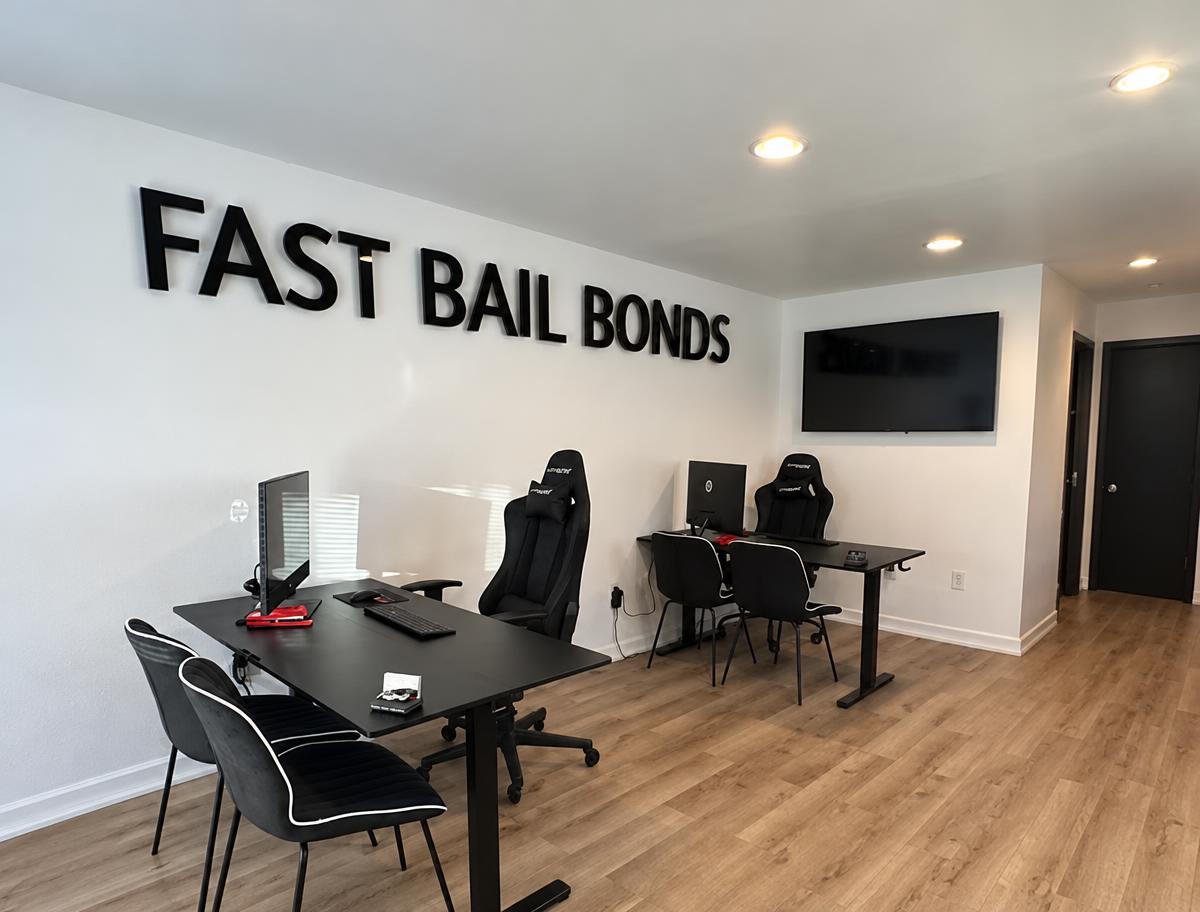
Separate a civil citation from an actual criminal release order before discussing an agreement.
Bilingual assistance and 24/7 telephone contact support preparation without guaranteeing a court or facility outcome.
After court authorization, explain premium, collateral and permitted expenses separately; continuing court duties remain.
13 / Preparation and answers
Answers depend on the legal track and the actual court record.
No. An ordinary speeding ticket is a civil infraction under Nevada’s civil traffic framework, not a criminal charge requiring commercial bail. Follow the citation’s court instructions and verify any different criminal allegation separately.
Yes. AB 116 and NRS 484A.703–484A.705 treat most ordinary Nevada traffic tickets as civil infractions. That does not make reckless driving, eluding or every other traffic-related allegation civil. Read the actual statute and court classification.
A civil ticket uses civil response, payment and contest procedures and carries no jail or commercial bail bond. A criminal traffic charge may involve arrest, court proceedings and authorized pretrial release. Classification and a bond order are separate questions.
No commercial bail bond is required. Under NRS 484A.7041, a court may require a bond or cash deposit before contesting, capped at the civil penalty plus administrative assessment and citation fees. That is a procedural court deposit, not a commercial bail bond or a 15% premium transaction.
It depends on the charged subsection of NRS 484B.653. Subsections (3) and (4) are misdemeanor branches; trick driving under (6) is gross misdemeanor; facilitating under (7) is misdemeanor first offense and gross misdemeanor later. The death/substantial-harm branch under (9) is Category B felony with its enhancement and greater-penalty qualifications.
NRS 484B.550 distinguishes misdemeanor willful failure to stop after the specified flashing red lamp and siren; Category B property-damage/endangerment and death/bodily-harm branches; and Category D for a qualifying DUI conviction in the same transaction. Confirm the exact charge and court order; an agency cannot predict the outcome.
Injury/death under NRS 484E.010 is Category B felony, with each injury or death a separate offense under (3) and no suspended sentence or probation on that sentence. Attended-property stopping duties under NRS 484E.020 and information/aid duties under NRS 484E.030 are misdemeanors. Unattended property has separate NRS 484E.040/.050 duties.
NRS 483.560(2) imposes the specified DUI-related branch’s 30 days–6 months jail OR 60 days–6 months residential confinement AND a $500–$1,000 fine, with no probation/suspension and plea restrictions. That subsection does not apply if the revocation period expired but the license was not reinstated. General requirements and subsection (3)–(5) qualifications still require review.
Not merely from ordinary civil default under NRS 484A.704. The 90-calendar-day civil response/default framework is not criminal FTA or a bench warrant. NRS 484A.700 has a separate limited parking-citation notice/appearance rule and bars a warrant when its notice is undeliverable. Verify any independent criminal case separately.
Possibly, but only if the issuing court authorizes an accepted criminal surety bond and the actual custody/release conditions permit posting. Verify the active warrant, case number, order and separate holds first. A bond is not assumed from the warrant label.
No. The issuing court controls recall or removal of a criminal traffic warrant. A bondsman has no special power to quash it. An attorney can advise about lawful court appearances and options; no recall or release is guaranteed.
Under NRS 697.300, the ordinary premium is 15% of the actual court-authorized bond or $50, whichever is greater. Collateral and permitted actual expenses are separate. No typical traffic bond amount is provided, and civil penalties or NRS 484A.7041 deposits are not priced as commercial bail.
No. Posting an authorized bond does not dismiss the allegation, eliminate appearances, restore a license, recall another warrant or end other holds. The court case and continuing obligations remain.
No. DUI is governed by NRS Chapter 484C and has its own guide. This page cross-references DUI only where relevant to eluding or specified license revocations; it does not duplicate DUI bail or penalty analysis.
14 / Reference desk
Official laws and local record resources, not agency-controlled courts.
Use the current official Nevada text and the actual court order for case-specific questions. Sentencing provisions do not supply a bail schedule, and an official directory does not establish custody or assignment by geography. Government resources are independent of Fast Bail Bonds.
DUI and criminal failure to appear remain separate topics. Companion-guide links appear only when the route registry permits published navigation; no unavailable guide is presented as an active destination.
Current official statute; read the applicable subsection and qualifications.
Current official statute; read the applicable subsection and qualifications.
Civil contest deposit—not a commercial bail bond.
Current official statute; read the applicable subsection and qualifications.
Current official statute; read the applicable subsection and qualifications.
Current official statute; read the applicable subsection and qualifications.
Current official statute; read the applicable subsection and qualifications.
Current official statute; read the applicable subsection and qualifications.
Current official statute; read the applicable subsection and qualifications.
Current official statute; read the applicable subsection and qualifications.
Current official statute; read the applicable subsection and qualifications.
Current official statute; read the applicable subsection and qualifications.
Current official statute; read the applicable subsection and qualifications.
Current official statute; read the applicable subsection and qualifications.
Current official statute; read the applicable subsection and qualifications.
Current official statute; read the applicable subsection and qualifications.
Current official statute; read the applicable subsection and qualifications.
Current official statute; read the applicable subsection and qualifications.
Current official statute; read the applicable subsection and qualifications.
Current official statute; read the applicable subsection and qualifications.
Current official statute; read the applicable subsection and qualifications.
Current official statute; read the applicable subsection and qualifications.
Current official statute; read the applicable subsection and qualifications.
Current official statute; read the applicable subsection and qualifications.
Ordinary bail premium; collateral and permitted expenses remain separate.
Official public resource; confirm current court or custody status directly.
Official public resource; confirm current court or custody status directly.
Official public resource; confirm current court or custody status directly.
Official public resource; confirm current court or custody status directly.
Current court orders and custody records control the individual case. Any bond transaction depends on lawful authority and case-specific acceptance. Government resources are independent of Fast Bail Bonds.